
Sustainable Marketing Strategy: The Key to Long-Term Business Growth
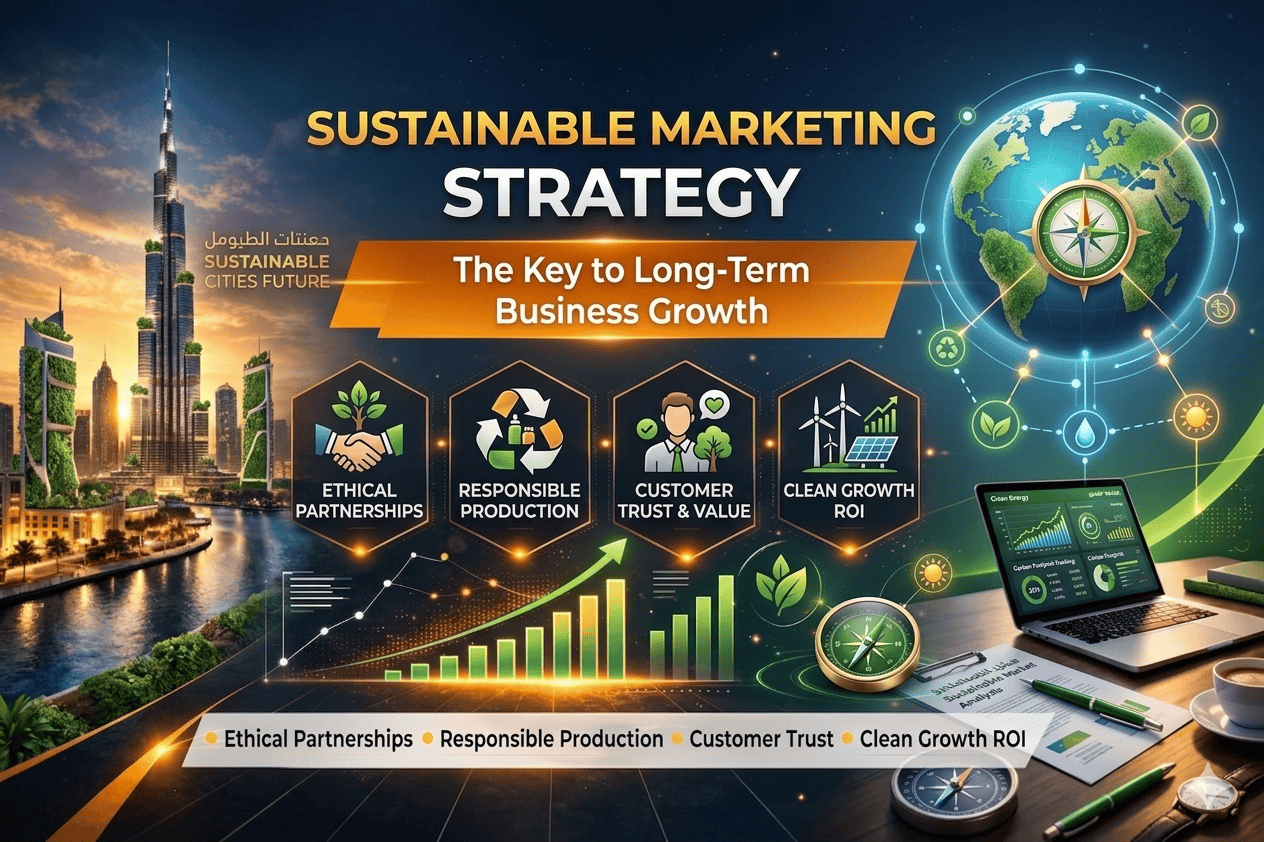
Sustainable Marketing Strategy: The Key to Long-Term Business Growth
In today’s environmentally conscious world, businesses are expected to adopt ethical and responsible practices. A sustainable marketing strategy not only supports the planet but also enhances brand reputation, customer loyalty, and long-term growth.
Therefore, developing a thoughtful sustainable marketing strategy helps companies align with consumer values while achieving measurable business outcomes.
What Is a Sustainable Marketing Strategy?
A sustainable marketing strategy focuses on promoting products and services in a way that balances business objectives with environmental and social responsibility.
Moreover, it incorporates eco-friendly practices, transparent communication, and long-term planning to meet both consumer and stakeholder expectations. As a result, a well-executed sustainable marketing strategy builds credibility and strengthens brand trust.
Why Businesses Need a Sustainable Marketing Strategy
First of all, consumers increasingly prefer brands that demonstrate responsibility and sustainability.
Additionally, implementing a marketing strategy can differentiate a business from competitors and attract loyal customers. Consequently, companies that prioritize sustainability experience higher engagement, positive brand perception, and long-term profitability.
Furthermore, aligning marketing efforts with sustainability helps meet regulatory requirements and fosters positive relationships with communities and stakeholders.
Core Elements of a Sustainable Marketing Strategy
To succeed, a sustainable marketing strategy should include several key elements:
1. Eco-Friendly Messaging
First, communicate your brand’s commitment to environmental and social responsibility clearly and authentically.
2. Green Product Development
Next, design products and services with sustainable materials and practices to support your marketing claims.
3. Ethical Supply Chain
Additionally, ensure transparency and accountability throughout the supply chain.
4. Content Marketing and Education
Then, create informative content to educate customers on sustainability initiatives and their benefits.
5. Analytics and Impact Measurement
Finally, monitor KPIs related to both business outcomes and sustainability performance to continuously optimize your strategy.
How a Sustainable Marketing Strategy Drives Results
A sustainable marketing strategy drives results by connecting purpose with performance.
First, it attracts environmentally conscious and socially responsible consumers. Next, it engages them with authentic stories, impactful campaigns, and transparent reporting. Then, it converts them into loyal customers while reducing negative environmental impacts.
As a result, businesses achieve long-term growth, stronger brand equity, and measurable positive social impact. Therefore, investing in a marketing strategy is a strategic business decision.
The Role of Content in a Sustainable Marketing Strategy
Moreover, content is a vital component of any marketing strategy.
Publishing blogs, infographics, videos, and guides that emphasize sustainable practices educates your audience and reinforces brand values. Consequently, content marketing strengthens trust, builds authority, and supports SEO while aligning with eco-conscious initiatives.
Common Challenges in Sustainable Marketing
However, businesses may face challenges when implementing a marketing strategy:
- Greenwashing or making unsubstantiated claims
- Balancing sustainability with profitability
- Ensuring consistent messaging across all channels
Therefore, adopting an authentic, transparent, and data-driven approach ensures your marketing strategy delivers meaningful results.
Benefits of a Sustainable Marketing Strategy
The advantages of implementing a marketing strategy include:
- Improved brand reputation and credibility
- Attraction of loyal and eco-conscious customers
- Long-term business growth and stability
- Positive environmental and social impact
Moreover, a strong sustainable marketing strategy can help companies stand out in competitive markets while fostering a positive global impact.
How to Choose the Right Approach
Selecting the right approach is crucial for a successful marketing strategy.
Key Considerations:
- Align sustainability initiatives with business goals
- Communicate efforts transparently to avoid skepticism
- Measure both environmental and business outcomes
- Continuously refine and optimize marketing practices
Additionally, integrating stakeholder feedback ensures your sustainable marketing strategy remains credible and effective.
Leveraging Digital Channels for Sustainability
Furthermore, digital marketing channels play a key role in executing a sustainable marketing strategy.
By using social media, email campaigns, and eco-focused content marketing, businesses can reach larger audiences efficiently and with minimal environmental impact. Consequently, digital channels amplify your sustainability initiatives while maintaining cost-effectiveness.
Tips to Maximize Sustainable Marketing Strategy Success
To enhance the impact of your sustainable marketing strategy, consider these tips:
- Highlight authentic sustainability achievements and initiatives
- Educate your audience about eco-friendly practices
- Use eco-conscious platforms and partners for campaigns
- Track KPIs related to both sustainability and marketing performance
Moreover, consistent communication and transparency ensure your sustainable marketing strategy builds trust and drives long-term engagement.
The Impact of Customer Education in a Sustainable Marketing Strategy
Moreover, educating customers about sustainability is a crucial component of a marketing strategy. By providing clear information on eco-friendly practices, product benefits, and environmental impact, businesses can engage their audience more effectively.
For example, sharing guides, videos, and infographics that explain how your products or services contribute to sustainability reinforces trust. Consequently, customer education strengthens loyalty and enhances the overall effectiveness of your sustainable marketing strategy.
Frequently Asked Questions (FAQs)
What is a sustainable marketing strategy?
A sustainable marketing strategy is a marketing approach that balances business goals with environmental and social responsibility to attract conscious consumers and build long-term trust.
Why is a marketing strategy important?
It differentiates your business, attracts loyal customers, enhances brand credibility, and contributes positively to society and the environment.
How long does it take to see results?
While some benefits, such as improved brand perception, are immediate, long-term ROI and customer loyalty often take several months to materialize.
Can small businesses implement marketing strategies?
Yes, even small businesses can adopt cost-effective and impactful sustainable practices to attract eco-conscious customers and grow responsibly.
What are the key components of a marketing strategy?
Key components include eco-friendly messaging, green product development, ethical supply chain practices, educational content marketing, and impact measurement.
In conclusion, a marketing strategy is essential for businesses aiming to grow responsibly in today’s market. By integrating environmental and social considerations with marketing initiatives, companies can achieve measurable growth while positively impacting the world.
Ultimately, investing in a sustainable marketing strategy strengthens brand reputation, attracts loyal customers, and supports long-term business success.